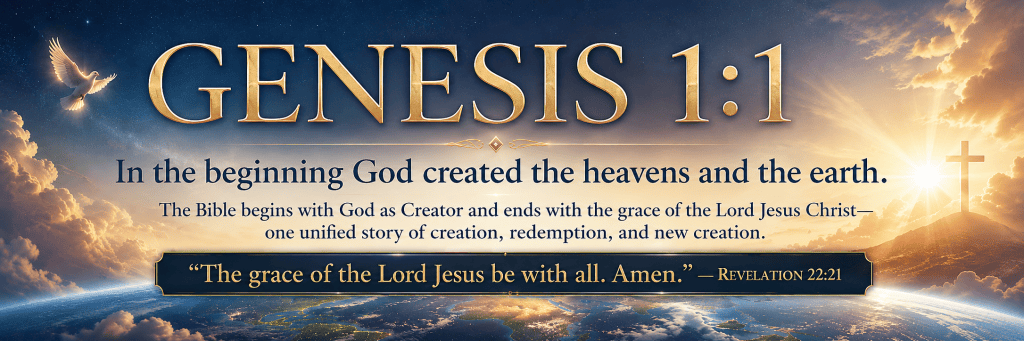
The first verse of the Bible is Genesis 1:1:
“In the beginning God created the heavens and the earth.” — Genesis 1:1
It is the foundation for everything that follows in Scripture because it immediately tells us who existed first, who created everything, and who ultimately owns and rules over creation.
“In the beginning” means at the beginning of the created universe—before the heavens, the earth, time as we know it, and everything in the physical world.
“God” means God already existed before creation. He was not created. He is eternal and self-existent.
“Created” means God brought the universe into existence by His power and will. Creation exists because God chose to make it.
“The heavens and the earth” is a way of saying everything that exists in the created order—the universe, the earth, and all that is in them.
So, in very simple terms:
Before anything else existed, God was already there, and He created everything.
Genesis 1:1 establishes the Bible’s starting point: God is the eternal Creator, and everything else is His creation.
The last verse of the Bible is Revelation 22:21:
“The grace of the Lord Jesus be with all. Amen.” — Revelation 22:21
It is a fitting final sentence for the entire Bible because the Bible’s message ultimately points to God’s grace through Jesus Christ.
“The grace of the Lord Jesus” means God’s undeserved favor, mercy, forgiveness, and salvation given through Christ. We cannot earn salvation by our works; it comes through God’s grace and is received by faith.
“Be with all” is John’s closing blessing and prayer that Christ’s grace would rest upon those who hear and receive the message of Revelation—and, fittingly, upon all who read God’s Word.
“Amen” means “truly,” “so be it,” or “let it be so.”
So, in very simple terms, the Bible ends by saying:
May the saving, sustaining grace of Jesus Christ be with you. So be it.

 The Gospel Truth App